Black Dot

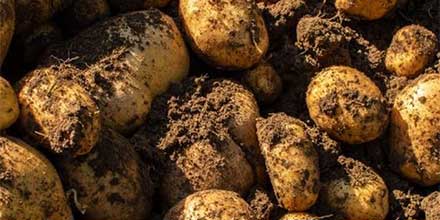
Potato research continues to grow at Trident Ag Products. This season, we’re conducting two trials with larger plot sizes covering half-pivot fields, giving us an even broader look at product performance under real-world growing conditions.
Putting Potato Trials to the Test | Trident Ag
Potato research continues to grow at Trident Ag Products. This season, we’re conducting two trials with larger plot sizes covering half-pivot fields, giving us an even broader look at product performance under real-world growing conditions.
Potatoes | Chile
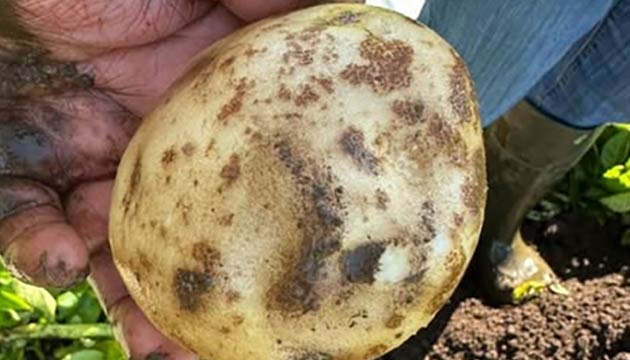
Healthy potato crops begin beneath the surface. We're proud to recognize TriCal Sudamerica, a valued member of the TriCal Group family of companies, for its commitment to helping potato growers build healthier soils and stronger crops throughout Chile. By promoting research-backed soil health solutions, TriCal Sudamerica works alongside growers to create the conditions for uniform crop development, high-quality tubers, and long-term productivity. It's another example of how our family of companies is helping advance sustainable agriculture through innovation, expertise, and local support.
Growing Better Potatoes Workshop
The Growing Better Potatoes workshop, hosted by Australian Horticultural Research (AHR) and the PotatoLink project, focused on soil and disease management strategies to protect potato yield and quality. Experts Dr. Len Tesoriero (CropDoc) and Dr. Chad Hutchinson (TriCal) shared insights on managing soil-borne diseases such as black dot and Verticillium wilt, including the role of integrated soil management practices.

Big conversation in Potato is coming December 5th
After the strong response to August’s Soil Under Siege panel on black dot, Spud Smart and TriCal Group are bringing together three leading soil health experts for a candid discussion on common scab — one of the most stubborn and costly diseases in potatos.
Another Potato Trial in the Books
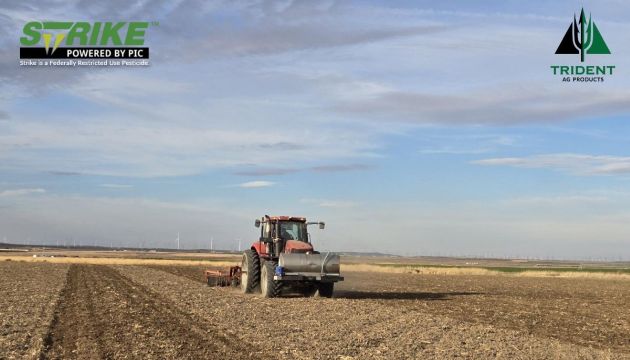
Another year brings another successful potato trial at Trident Ag Products. This season, we expanded to two trials and increased the plot size to half pivot fields. Our multi-year approach allows us to work closely with growers and monitor performance over time, helping us gather strong, reliable data.
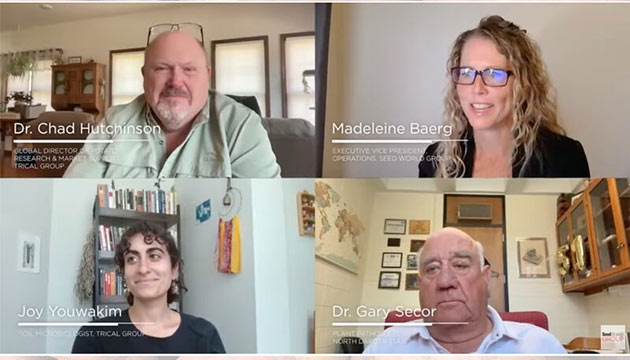
Trical Employees Sit on Expert Panel on Black Dot in Potatoes
Black dot is spreading in potato fields — and farmers are right to be concerned. While not a new disease, black dot is becoming tougher to manage, stealing yield, blemishing tubers, and reducing marketability. That’s why Spud Smart brought together three experts for the Soil Under Siege panel.

What Global Lessons Have we Learned About the Suppression of Black Dot?
One of the most underestimated culprits f crop loss Colletotrichum coccodes, or black dot, this pathogen thrives in stressed plants and plays a key role in the early die complex. But despite its impact, it’s often confused with or overshadowed by more familiar threats like verticillium wilt.
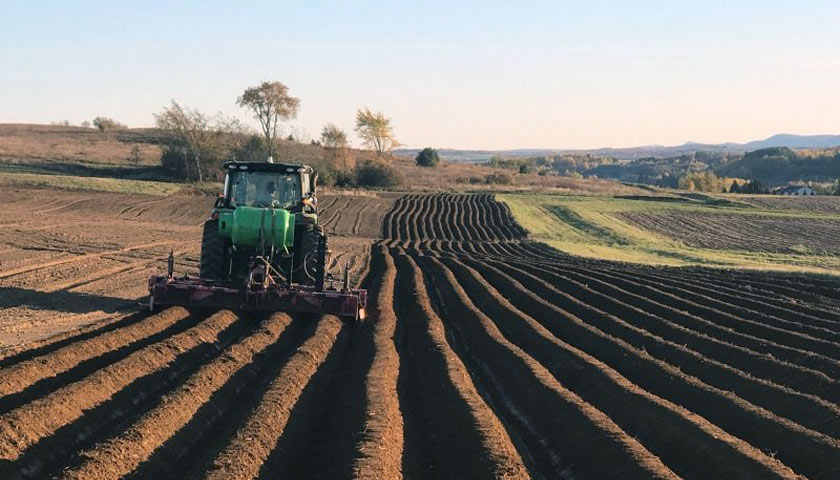
Stronger Plants, Better Yields, Fewer Resources
Stronger plants, better yields, fewer resources - and a lower carbon footprint. Potato growers face big sustainability goals, but with the right tools, we can get there—without sacrificing productivity. One tool that’s helping make this possible is Strike, driven by the chloropicrin.
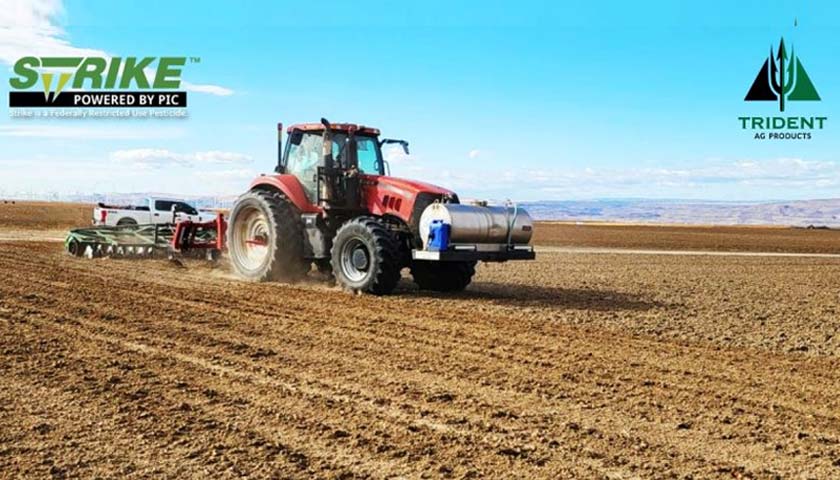
Potato Trial in Oregon focused on Tackling Pathogens
Trident Ag Products and Dr. Maxwell Handiseni are conducting a potato trial in Boardman, Oregon, focused on tackling pathogens like verticillium wilt and black dot in potatoes using chloropicrin, the active ingredient in Strike™ Soil Fumigant.

Strike Targets Seed Growers with Focus on Black Dot
Black dot has historically been overlooked in potato seed production. Recent research shows that black dot, caused by the fungus Colletotrichum coccodes, working synergistically with Verticillium dahliae and root-lesion nematodes to weaken plants and reduce yields.
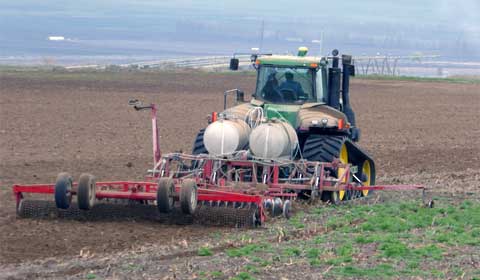
Trident fights Common Scab, Verticillium Wilt & Black Dot
Trident Ag. recently completed Strike™ fumigations in potato fields in Washington State to help control soil-borne diseases like Common Scab, Verticillium wilt, and Black Dot, ensuring healthier soil and better crop yields.

Soil Fumigation Treatment Zones — What You Don’t Know Could be Stealing from Your Investment
When growers apply Strike soil fumigant under their carefully managed field conditions, they get impressive results — control of rhizoctonia, black dot, common scab; boosted crop yield and improved sustainability.

Are You Throwing Money Away on Your Soil Fumigation?
You’ve seen the research study results that show soil fumigation with Strike can effectively subdue rhizoctonia, black dot, common scab, and early die complex. You’ve heard experts explain how chloropicrin can boost soil’s health and potato production’s sustainability.
Potato Expo 2020
Dr. Chad Hutchinson reviews how soil fumigation with Chloropicrin helps tackle potato scab, black dot, rhizoctonia, verticillium wilt, and nematodes while positively impacting overall soil health.?